Korea Bought a Tariff Ceiling With a Texas Gas Plant: The Chip Tariff Does Not Cover Memory

An empty customs inspection hall at night with a single sealed wooden crate lit on one bench, illustrating the tariff ceiling Korea's US investment package is meant to protect, from korea-stock-guide.com

On 7 September Korea resolved to make a 22 billion dollar, 6.3 gigawatt gas complex at Encinal, Texas the first project under its 350 billion dollar investment package. No listed company owes anything: the money moves through a state vehicle. The package exists to protect a tariff ceiling, and the tariff most coverage cites does not do what it is said to do. The Section 232 action of 14 January 2026 charges 25 per cent on a narrow band of logic parts aimed at Nvidia and AMD accelerators, carries seven end-use exceptions and contains no country ceiling; Korean memory is not in it. The live exposure is a broader measure that has been signalled but not published, whose rate Commerce Secretary Lutnick has said may be linked to how much a company invests in American manufacturing. That is what makes a Texas gas plant a semiconductor story.

TLB and SOCAMM: The Nvidia Capacity Cut That Misses the Substrate Maker

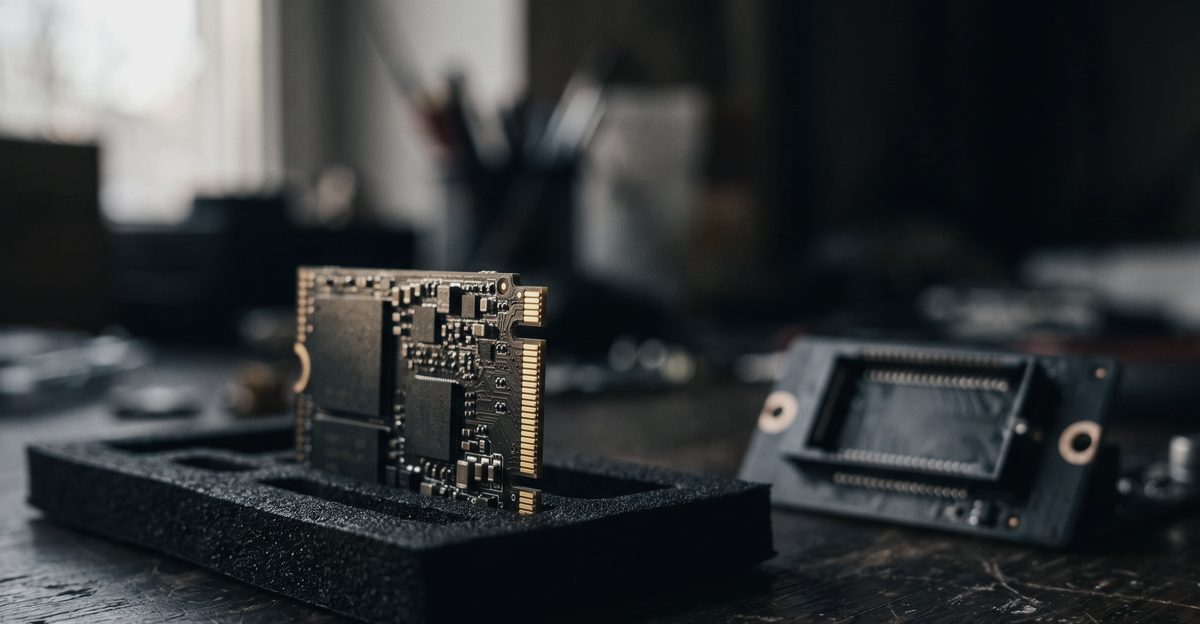
A small detachable memory module standing on edge in a foam tray with its row of gold contact fingers catching low light and an empty socket behind it, illustrating why halving the memory on a module does not halve the substrate maker's orders, from korea-stock-guide.com

Three Korean brokerages published on TLB in August and September, all of them building the case on SOCAMM, the detachable memory module Nvidia’s Vera processor uses. None mentions that Nvidia was reported in late July to have halved that module’s capacity from 192 gigabytes to 96 to hold memory under 29 per cent of a 2.1 million dollar system bill of materials. The published numbers reconcile: eight modules per processor, thirty-six processors per rack, 55 terabytes before and 28 after. Module count does not change, and a substrate maker is paid per module. What halves is bits, which belong to Samsung, SK hynix and Micron. The exposure that matters is module count per processor, and nobody has reported a change to that.

The AI Slowdown Trade of September 2026: Why Samsung and SK hynix Did Not Follow

A large industrial plant spread across a coastal plain at first light, seen from a distant ridge, illustrating why the memory supply available in 2027 was committed years earlier, from korea-stock-guide.com

American chip stocks fell about 5 per cent on 14 September after Anthropic’s chief executive called for a slowdown in model development, and the hyperscalers that buy the chips rose. Korea fell harder than the American chip index, then closed higher the next day while US chips kept falling. The reason being credited is long-term supply contracts, and those are the same figures Samsung gave on 30 July, not new ones. TrendForce’s own explanation of why high bandwidth memory contract prices have lagged spot contains the problem: the three large suppliers negotiate those contracts annually, which is the mechanism Micron used to describe its old agreements rather than its new take-or-pay ones. The defence that does hold is physical. By 2027 high bandwidth memory is estimated to take about 30 per cent of wafer input to deliver 13 per cent of bits, new capacity does not ramp until the second half of 2027, and Nvidia is already cutting the memory stack on Rubin Ultra because of what it expects to be unable to buy.

Korea Premium Week 2026: What Is Actually on the Agenda

Rows of empty chairs facing an unlit stage in a large conference hall, illustrating the three-week investor programme Korea has scheduled for overseas institutions, from korea-stock-guide.com

Korea’s financial regulator and its exchange have put 42 institutions and 55 listed companies behind a single three-week programme aimed at foreign investors, running 28 September to 16 October. Samsung Electronics and SK hynix are presenting. But the sessions that decide whether a foreign fund can hold Korean stock without a workaround are the policy … Read more